Sol Mariculture and Integrated Multi-Trophic Aquaculture
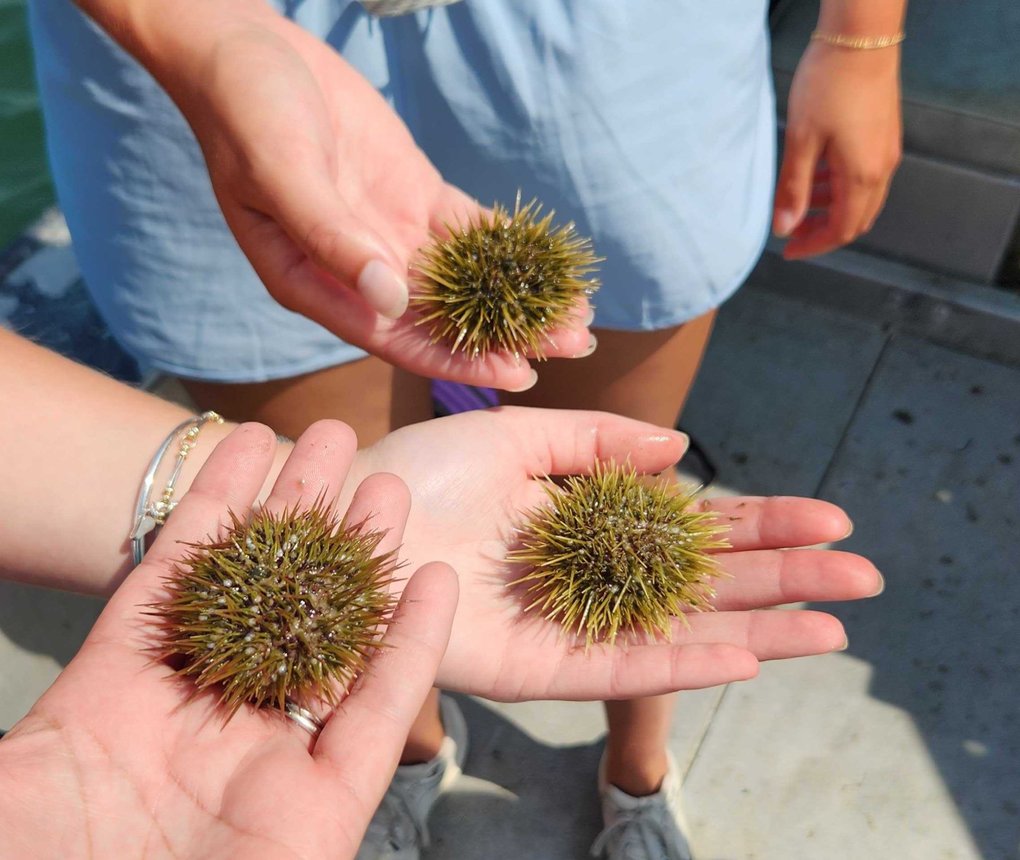
Sol Mariculture is an aquaculture farm in Brunswick that uses an integrated multi-trophic aquaculture (IMTA) system to maximize production by growing oysters, sea urchins, and sea vegetables all in one system. Seth White, the owner of Sol Mariculture, hopes that by growing kelp and Irish moss near his oysters, excess nutrients expelled by oysters will be absorbed by the seaweed. This in turn would help reduce the environmental impact of his operation while also creating alternative products for his business. By absorbing the waste from the oysters, the seaweed will be high in nitrogen, allowing the seaweed to become protein rich. This nutrient packed seaweed is not intended human consumption but for feeding the green sea urchins also being farmed. Seth hopes this integrated system will help support healthy and fast growing urchins with richer uni, the product derived from urchins.
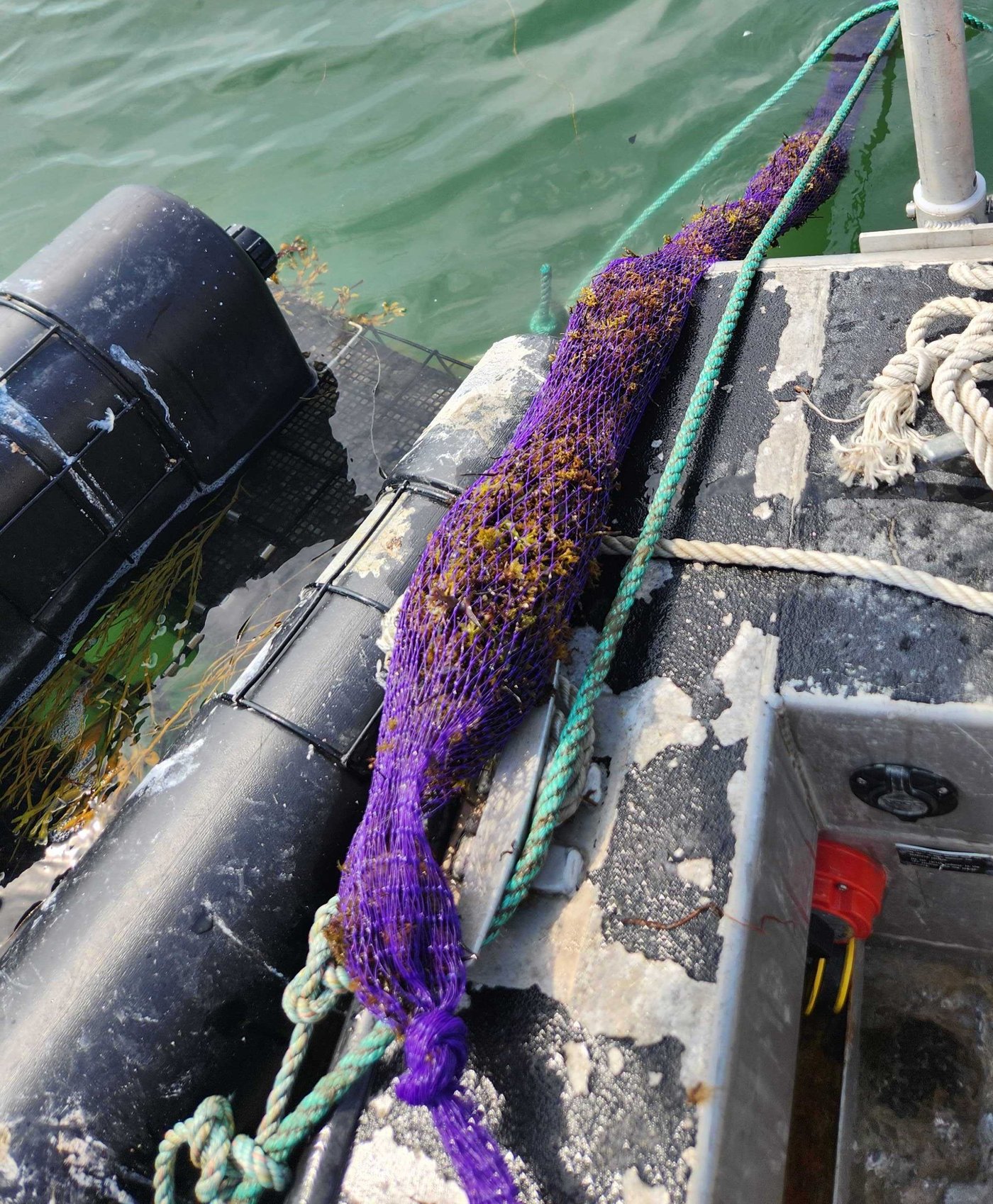
At Sol Mariculture, the oysters are grown in oyster cages, with nets of Irish moss strung up alongside the oyster cages. The Irish moss grows well but biofouling from unwanted organisms is a complication. This complication is mitigated by putting the seaweed in new unfouled bags and cleaning the old bags as the growth becomes an issue. Seth chooses to grow Irish moss as it is available to be wild harvested, unlike kelp, which is much less accessible. One useful observation Seth has observed is the sea urchins often eat all the Irish moss first, while leaving behind some of the kelp. There may be some nutritional reasons behind this preference, but more research is needed.

Oyster Growing Techniques
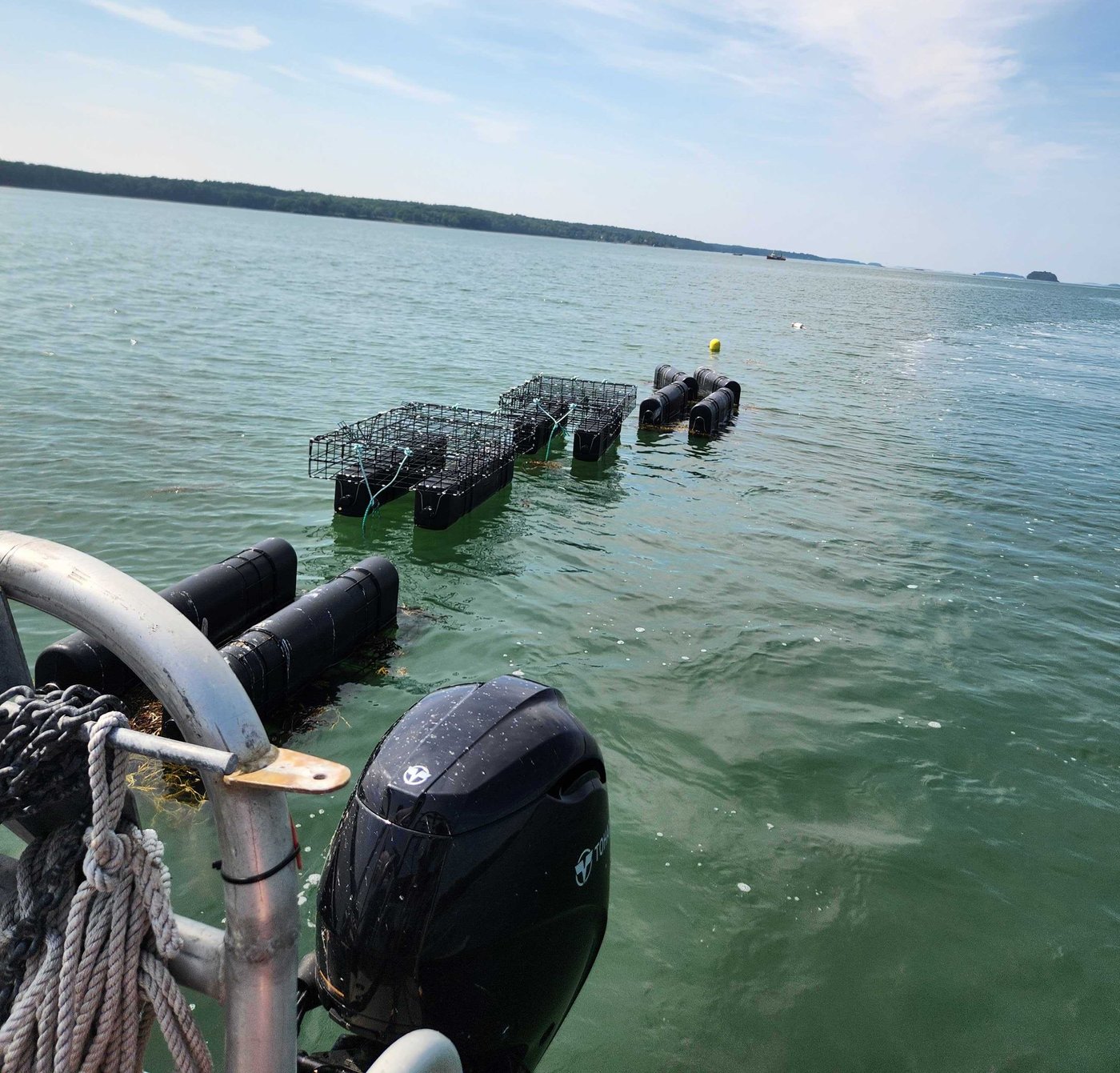
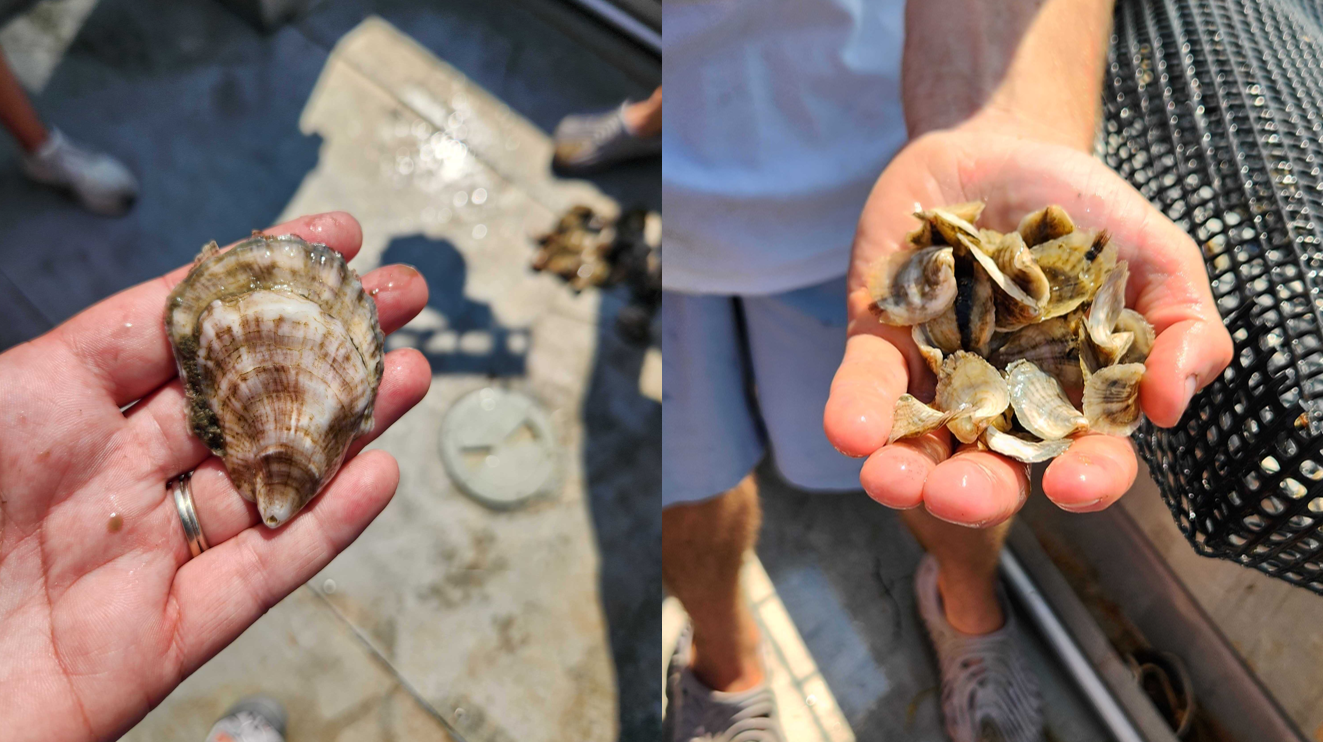
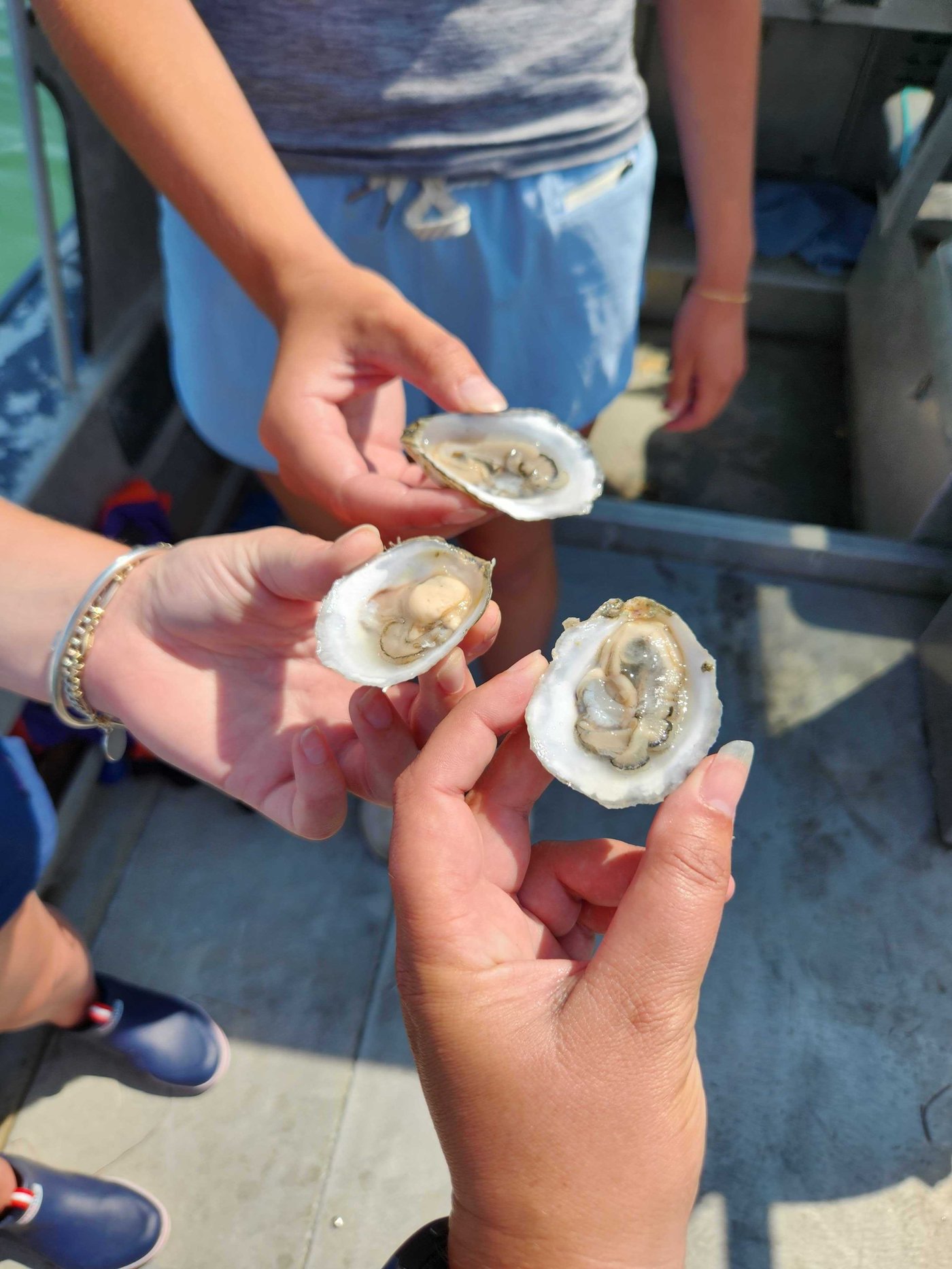
Sol Mariculture has different techniques for growing oysters. One technique is to use floating oyster cages kept at the surface of the water. These cages let the moderate wave action at the farm site tumble their oysters, encouraging a nice deep shell to grow. Sol Mariculture also utilizes a horizontal suspended system on mudflats. They hang the oyster bags with a float off ropes supported by the poles so that the oysters can grow in this intertidal zone during the summer months. As the tide comes in and out the oyster bags up and down, providing a tumbling action for the oysters. Both growing techniques don’t require any additional manual tumbling decreasing the amount of labor needed to run their farm.
Introducing the sea urchin
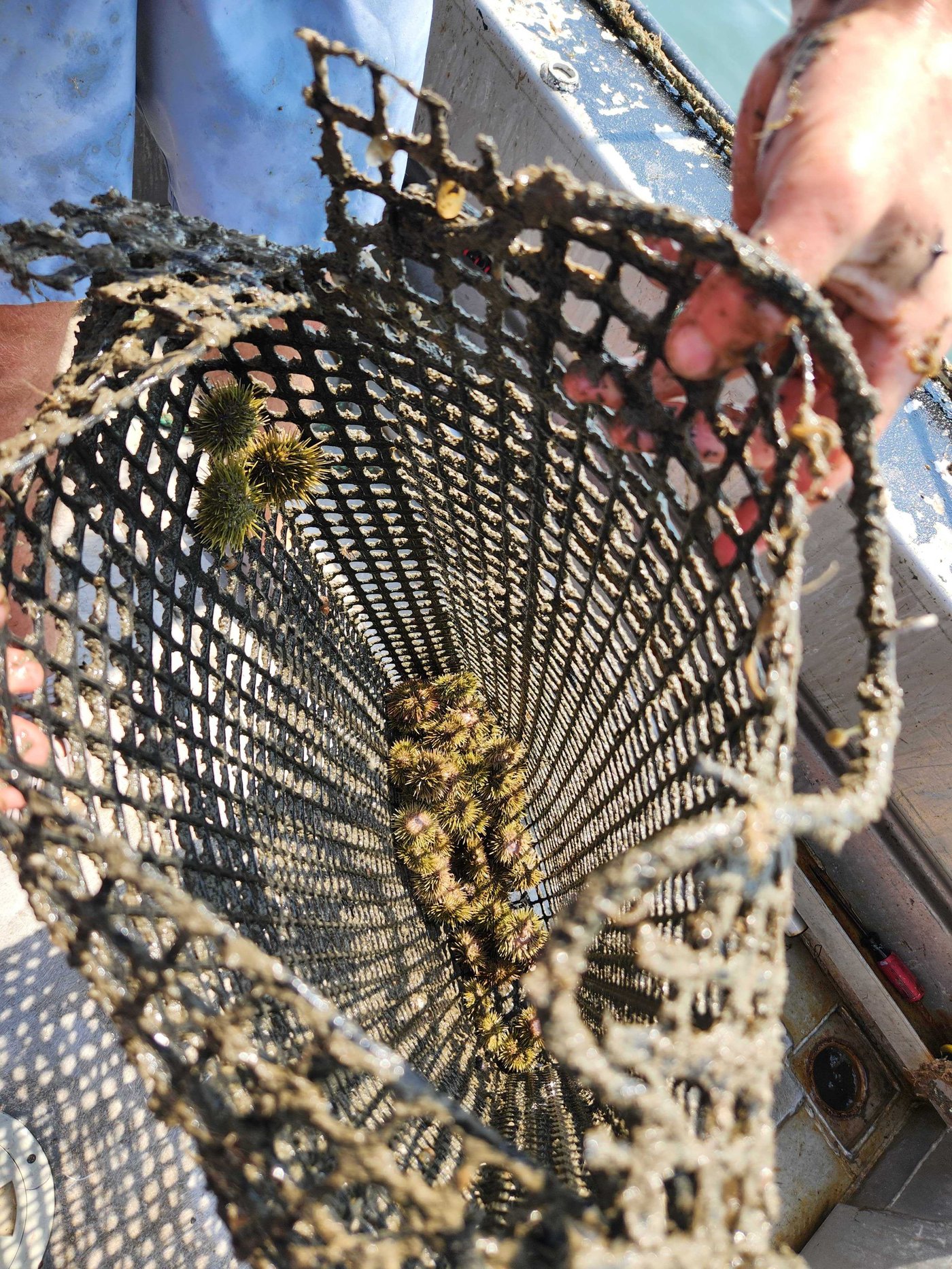
The green sea urchins at Sol Mariculture are grown in oyster bags set inside of retrofitted lobster cages with wooden slats on the bottom. Seth is working with a company called Seascale to help design an optimal cage. The cages are placed on the seafloor during the summer months when the water temperature is warmer. During the winter when the water is cooler, the urchins are suspended in the water column. A benefit of growing sea urchins is that they eat a lot, and if there is no Irish moss in the cages the urchins will turn to grazing on the biofouling growing on the cages.
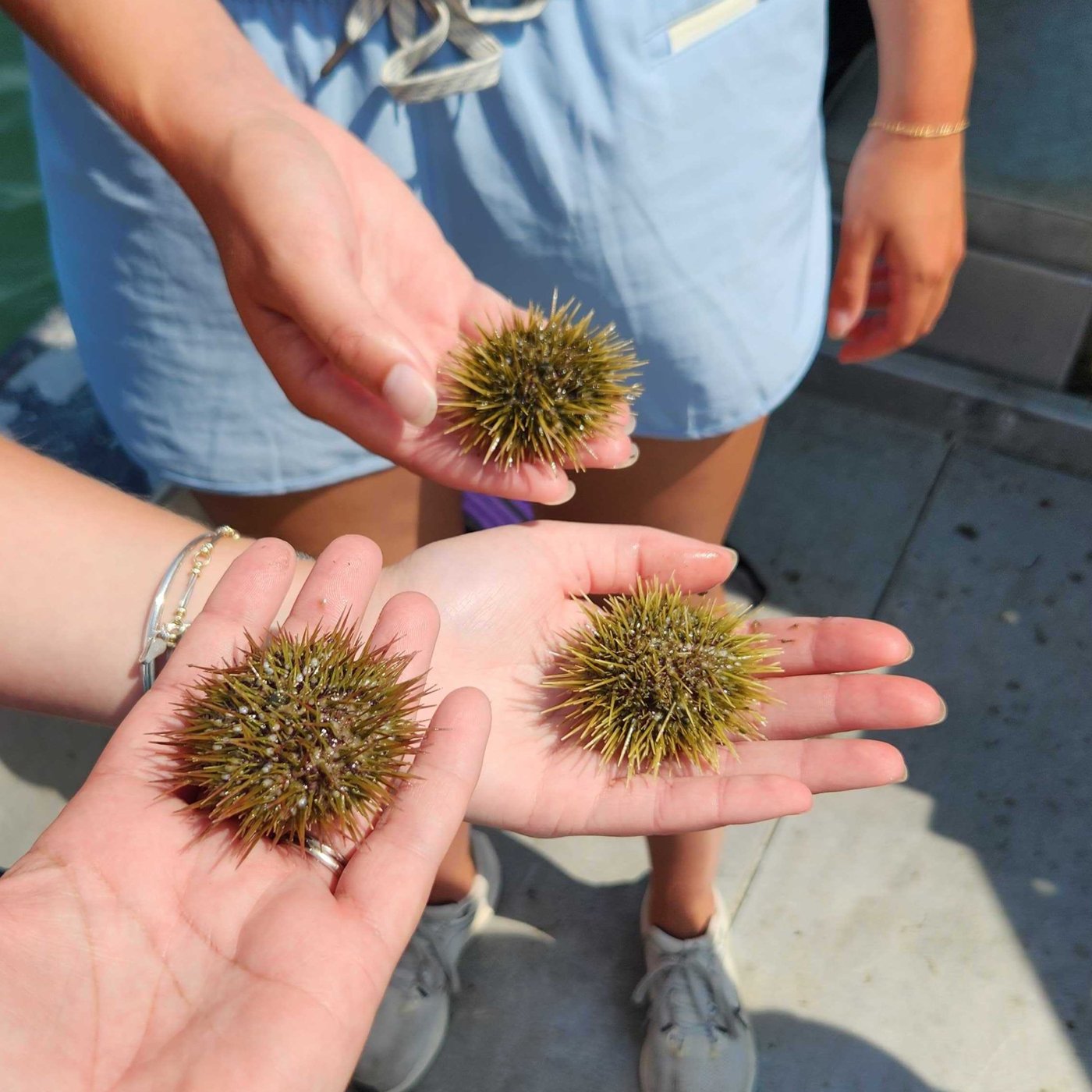
The sea urchin seed used by Sol Mariculture is provided by the University of Maine Center for Cooperative Aquaculture Research. Through funding from the Northeastern Regional Aquaculture Center seed was given to farmers with the provision that they report data on the growth of the sea urchins. Typically, sea urchins are expected to reach market size in around four years, however, Seth believes that if his sea urchins maintain the same growth rate, they could be ready for market in roughly two years.
Scaling up
Sol Mariculture plans on scaling up in the near future. Seth is waiting on the oysters to grow to be a bit bigger so that he can put some out on a limited purpose aquaculture lease closer to the sea urchins. Seth also has plans to put longlines of kelp into the water near the urchins to be harvested intermittently as additional urchin feed.
Innovations articles highlight creative devices or methods on aquaculture farms. They are informed by farm visits and interviews with experienced growers. See our About page for more information.